1797 Leavitt-Hovey House
Bonham & Douglas Architects partnered with Greenfield Savings Bank to transform the historic Leavitt-Hovey House into office space for the bank's growing financial services departments. The project reimagines one of Greenfield's most significant historic buildings while preserving the architectural character and community legacy that have defined it for more than two centuries.
Originally constructed in 1797, with adjoining wings added in 1817, the Leavitt-Hovey House was designed by renowned architect Asher Benjamin. Throughout the 19th century, the building housed some of Greenfield's most prominent lawyers and physicians, including pioneering female physician Mary P. Dole. In 1907, the City of Greenfield acquired the property and converted it into the public library, undertaking a major renovation and rear addition completed in 1908. Much of the building's current historic character dates from this period.
Balancing Preservation and Modern Function
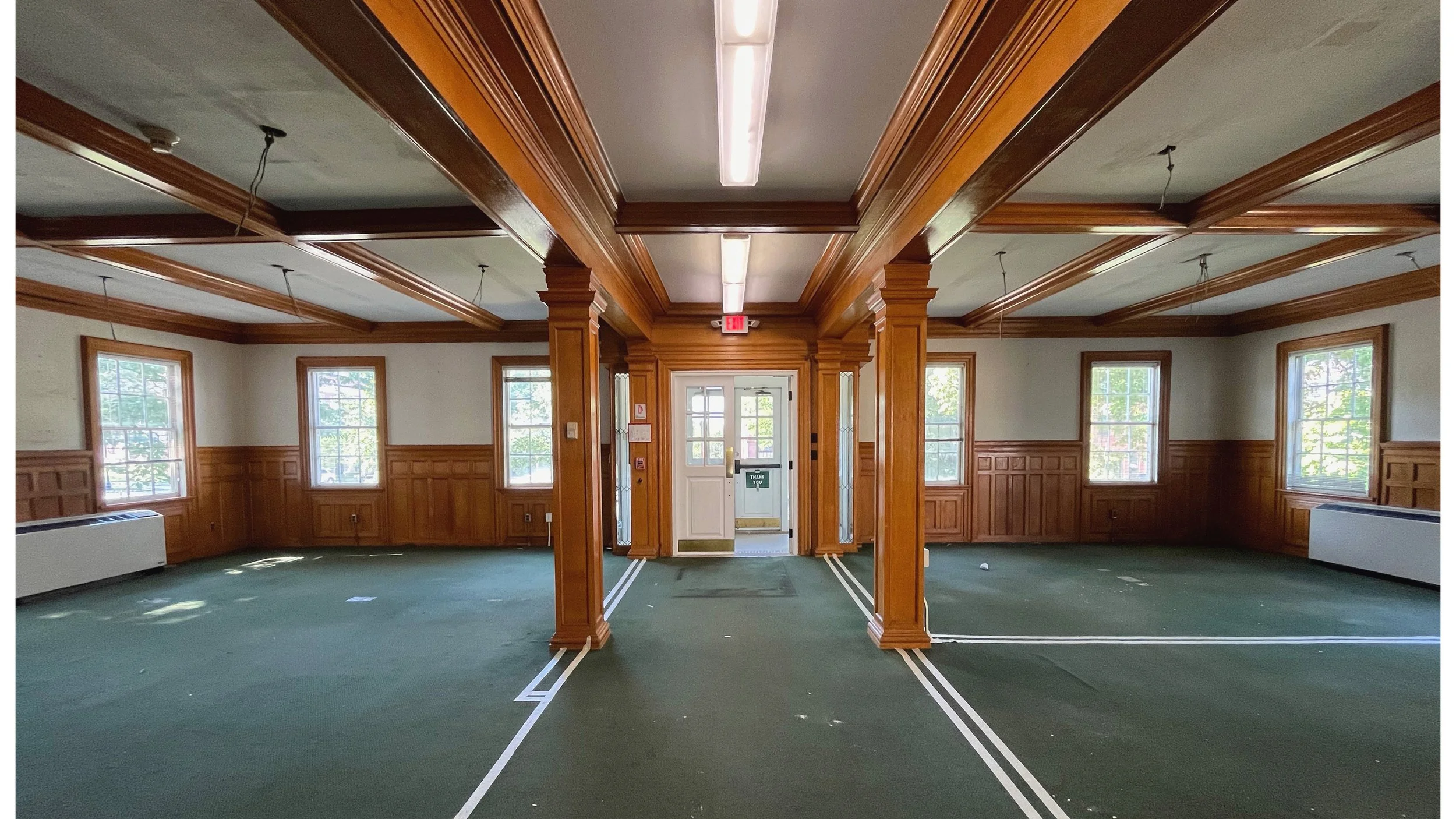
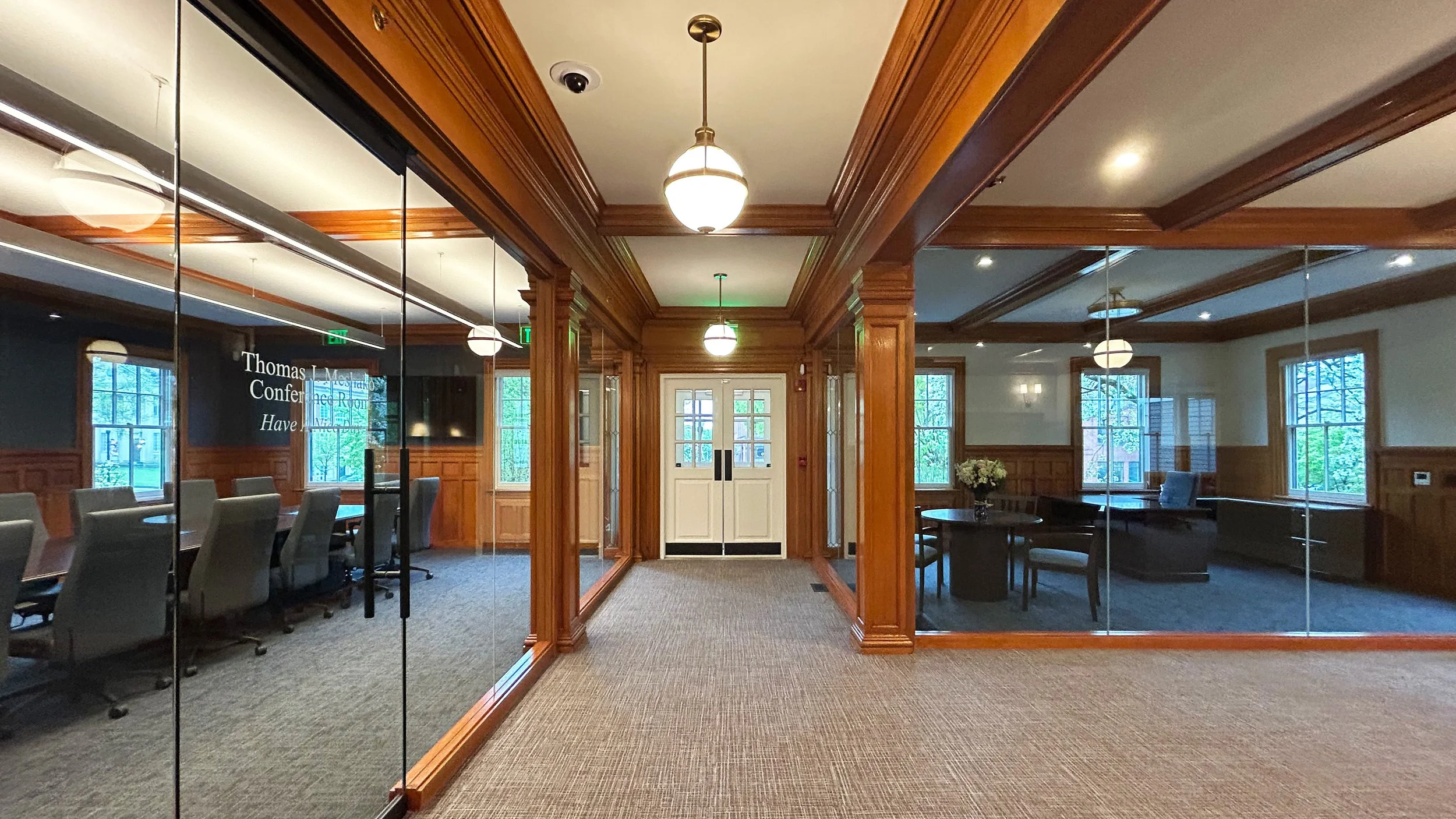
The renovation carefully balances contemporary workplace needs with the preservation of historically significant spaces and architectural features. To qualify for historic rehabilitation tax credits, the project adhered to rigorous state and federal preservation standards.
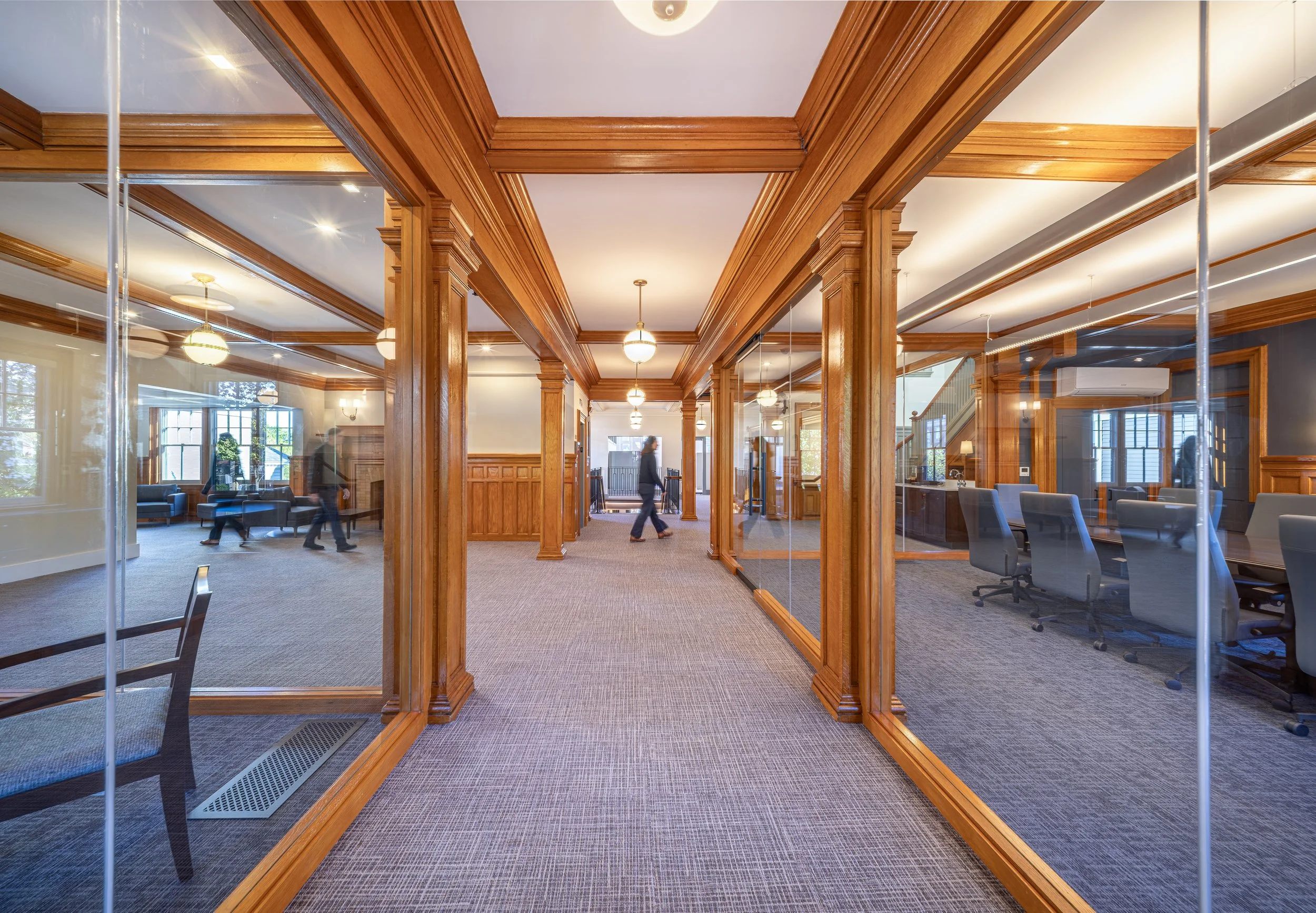
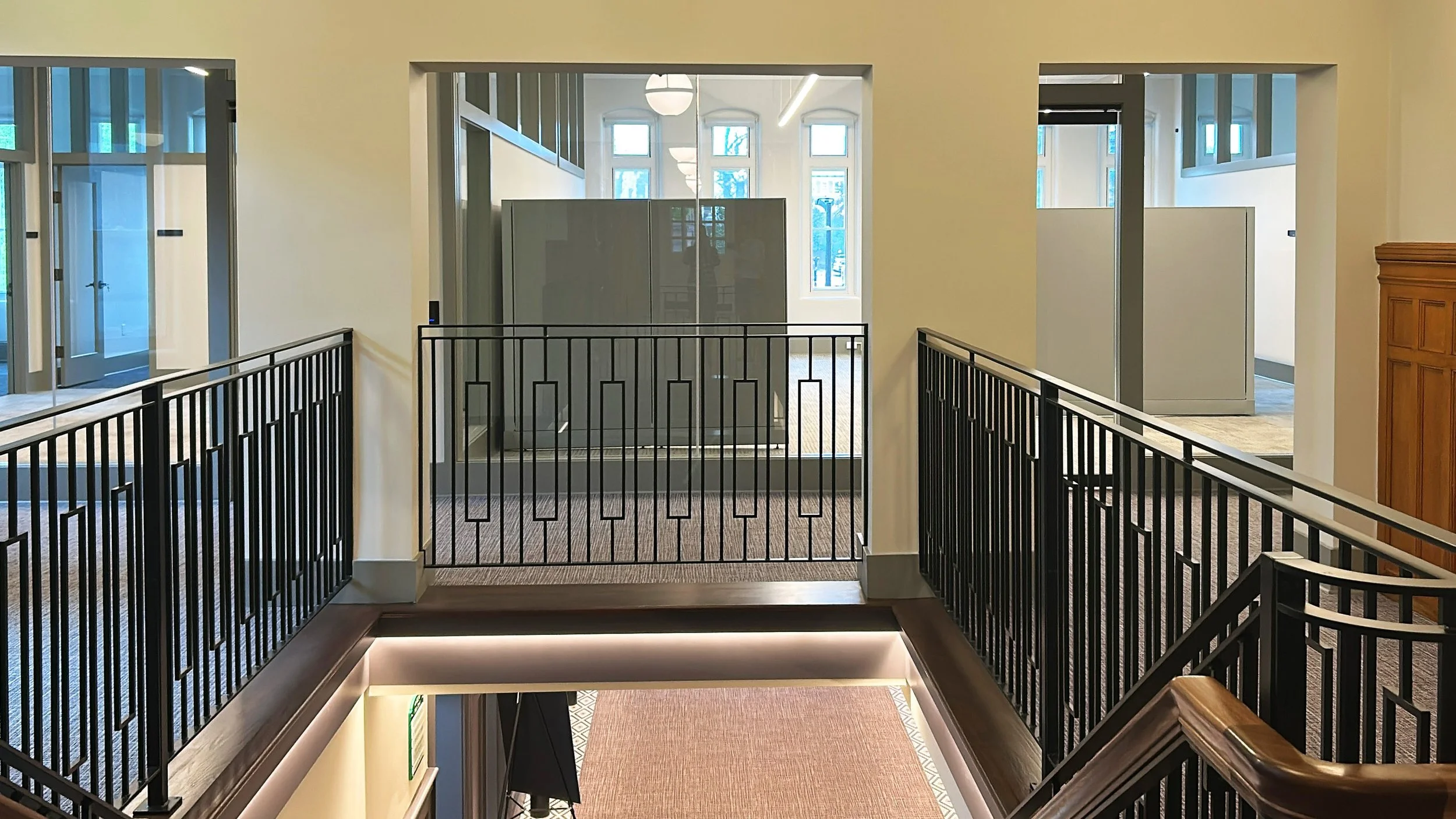
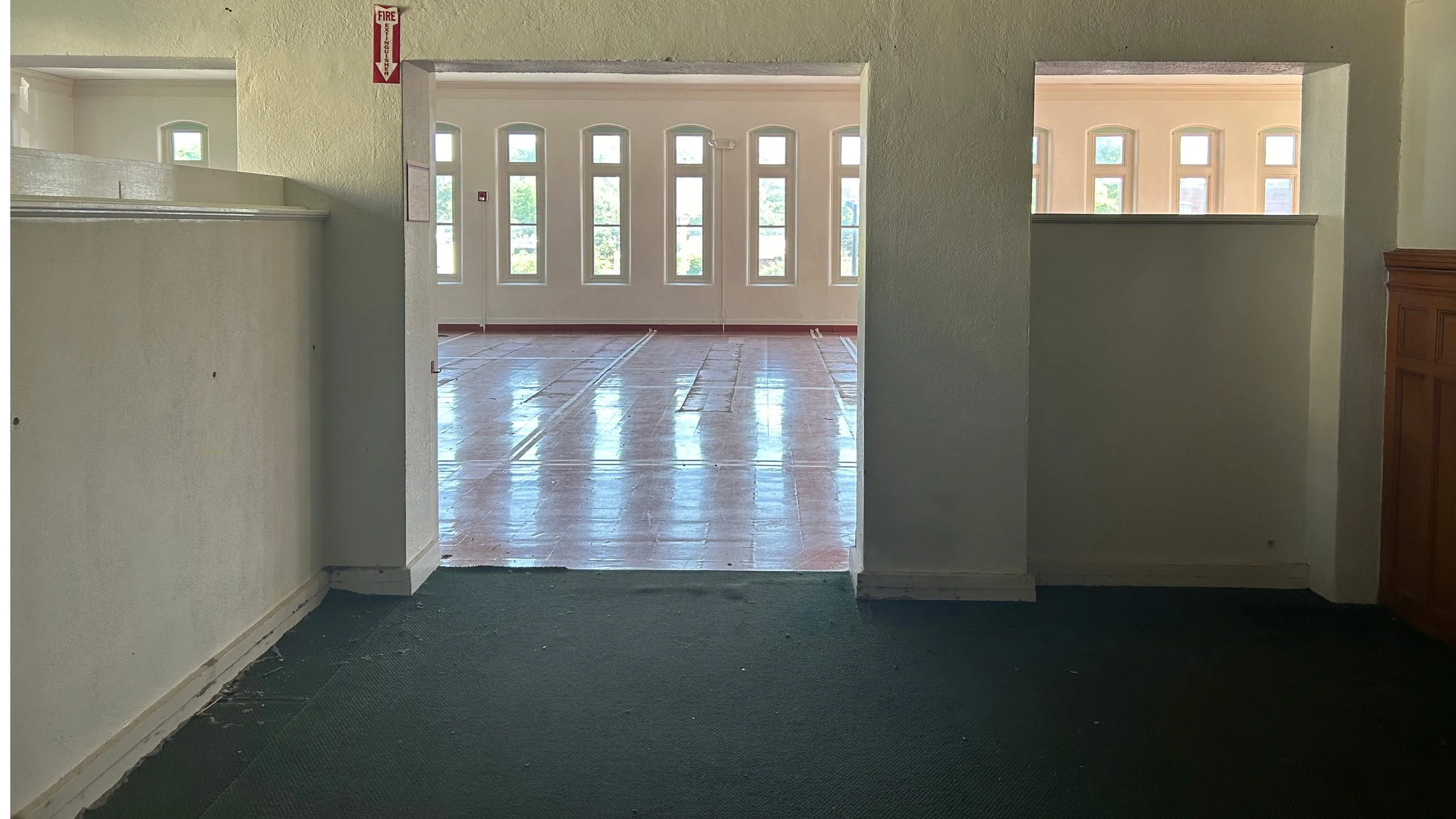
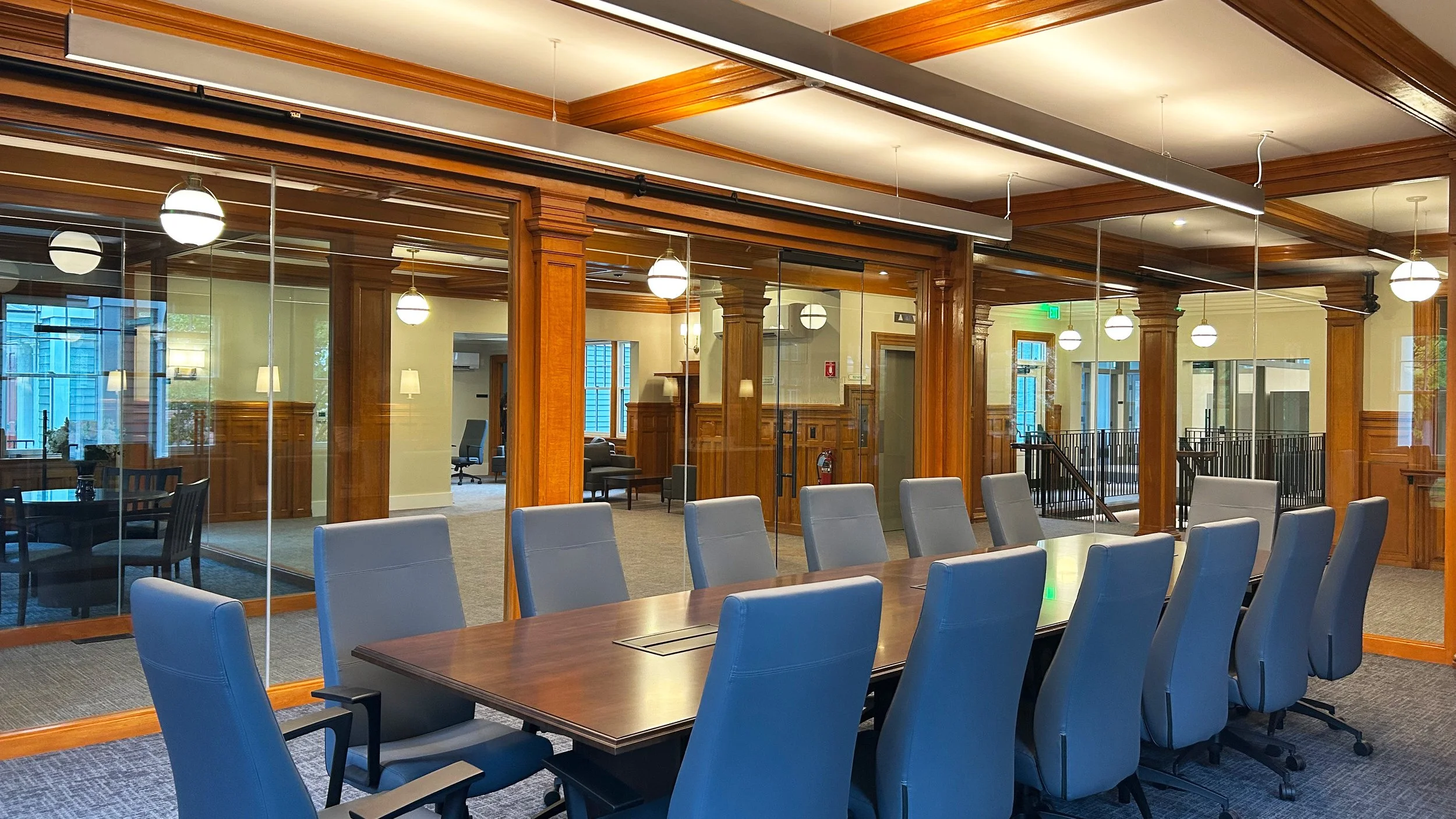
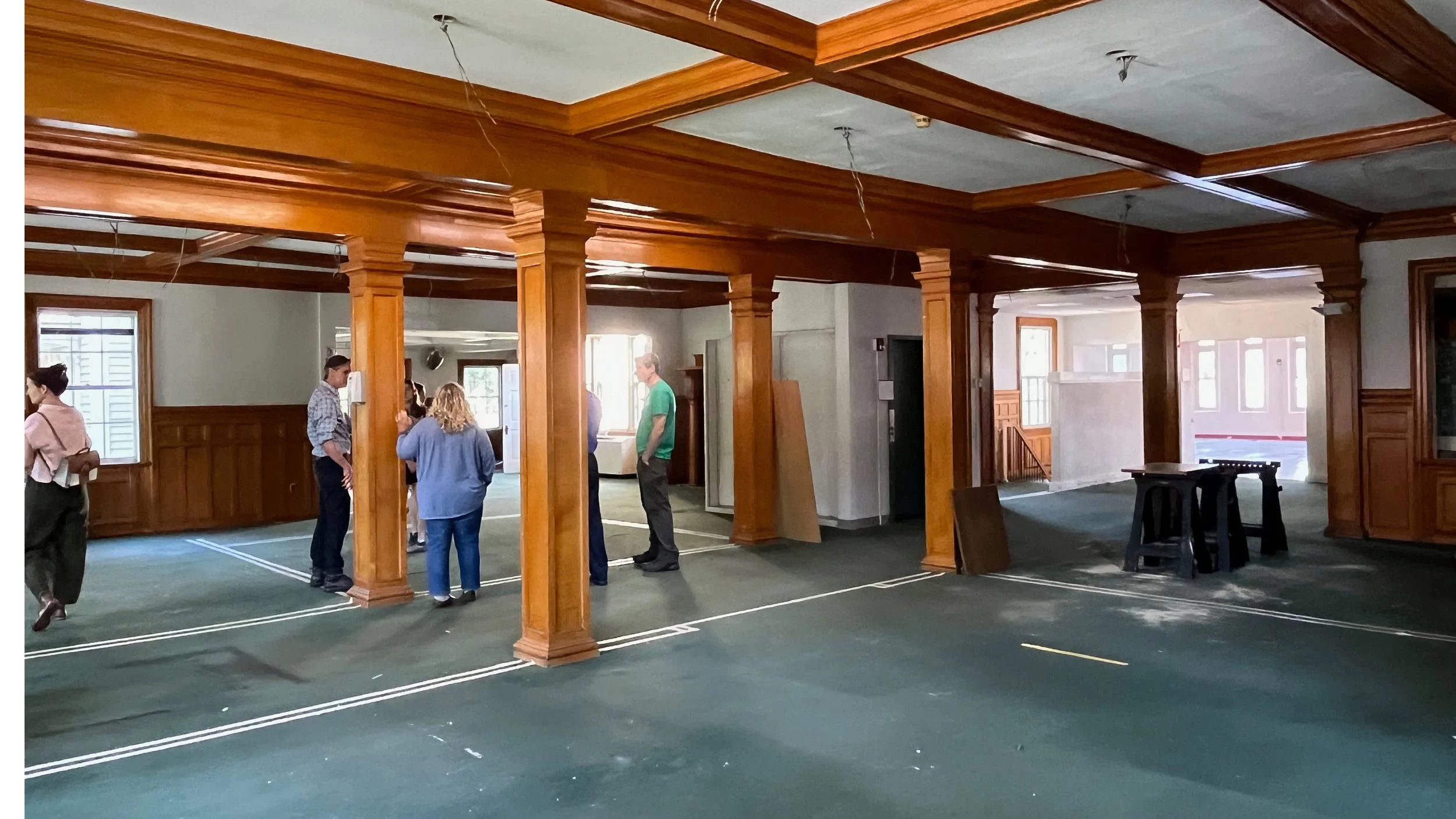
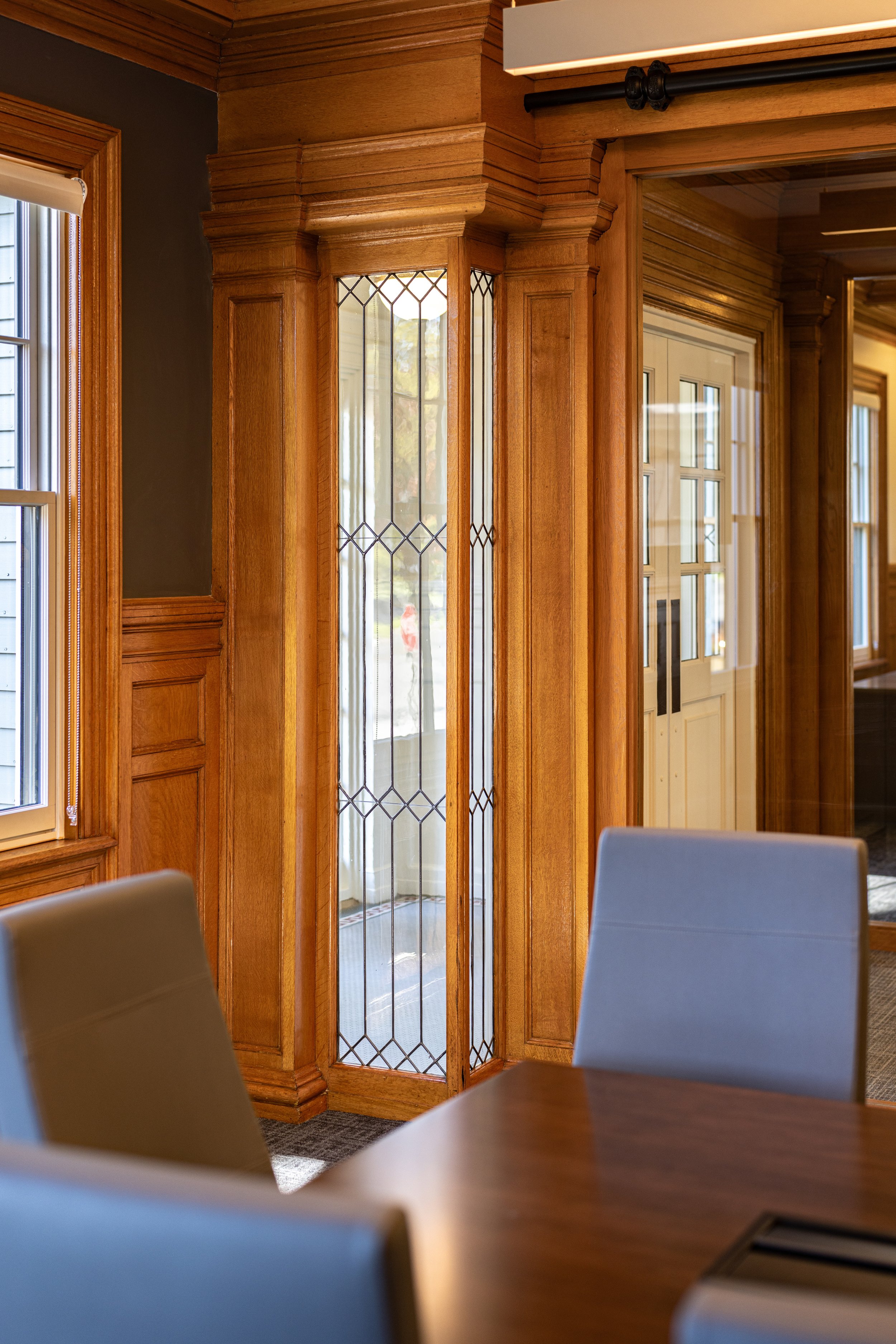
Historic sightlines throughout the former library were maintained through the use of fully glazed office partitions and large transoms, allowing natural light and visual connections to flow through the building while accommodating modern office functions. New architectural elements were designed to complement the existing structure, including custom-glazed partition systems carefully scribed around historic column capitals and faithfully reproduced wainscoting crafted to match original woodwork.
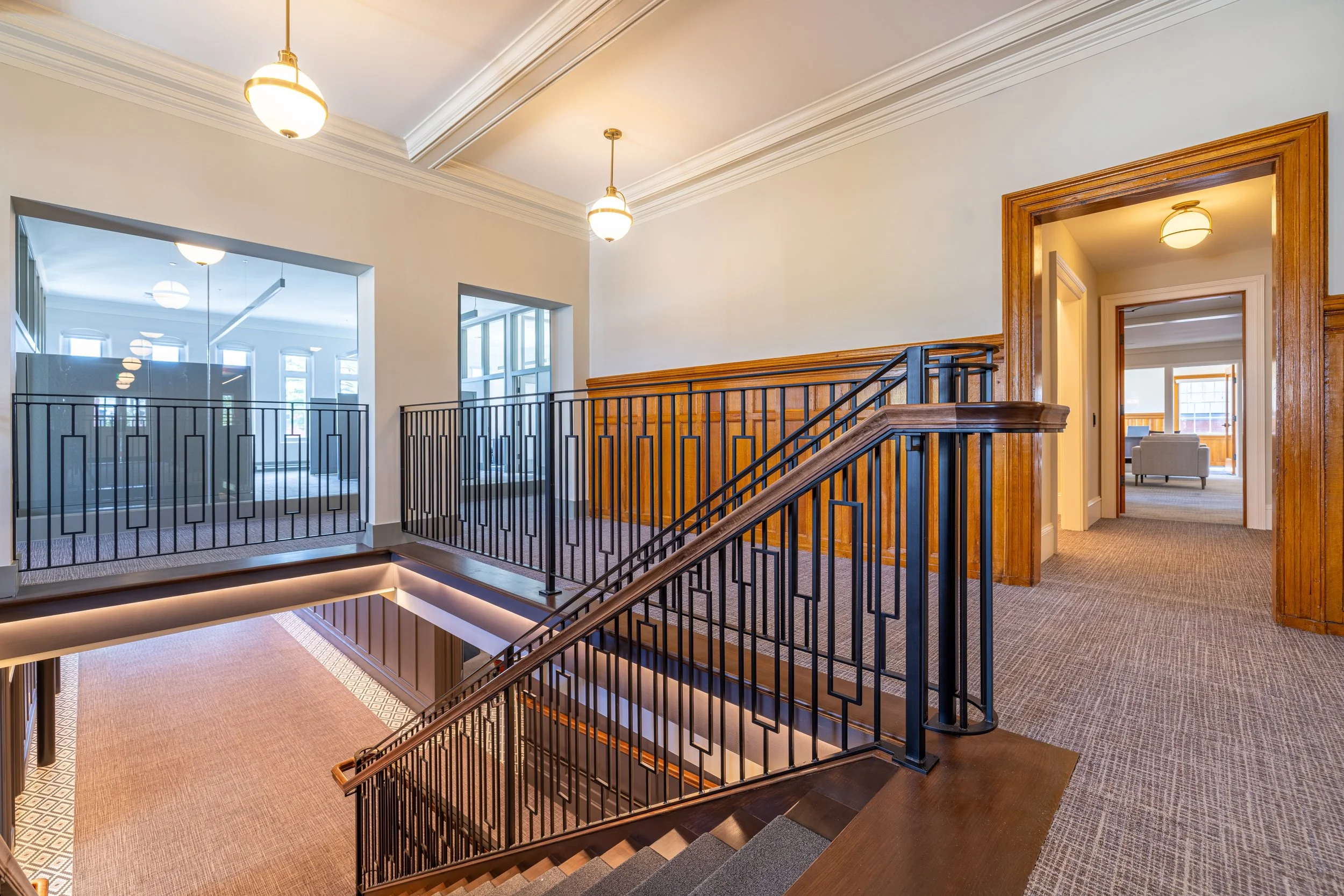
A significant reconfiguration of the lower level transformed a former service entrance into the building's primary point of arrival. The basement corridor was widened, structural columns relocated, and a new connecting staircase introduced to create a welcoming and intuitive entry sequence for employees and visitors alike. The new staircase features ornamental black steel balusters and a sculptural walnut handrail that bridges the transition between contemporary interventions and the building's historic fabric.
Improving Accessibility and Performance
The renovation also focused on improving accessibility and building performance for long-term use. New ADA-compliant restrooms, an improved accessible ramp, and enhanced elevator access make the building more welcoming and functional for all users.
Behind the scenes, a new high-efficiency heat pump HVAC system and a modern fire sprinkler system significantly improve comfort, safety, and energy performance while supporting the building's continued use for decades to come.
Restoring Historic Character
Exterior restoration work drew upon historic photographs and neighboring preserved buildings to guide the building's renewed appearance. Historic windows were restored wherever possible, while non-historic replacements were replaced with windows that more accurately reflected original muntin patterns and proportions. The building was repainted in a historically appropriate palette featuring gray siding, white trim, and black shutters, restoring the visual character that defined the property at the turn of the twentieth century.
Today, the Leavitt-Hovey House continues its long history of serving the Greenfield community—adapted for contemporary use while honoring the architectural legacy and civic importance that have shaped its story for more than 225 years.